
Remembering Our Friend Mac Kelton
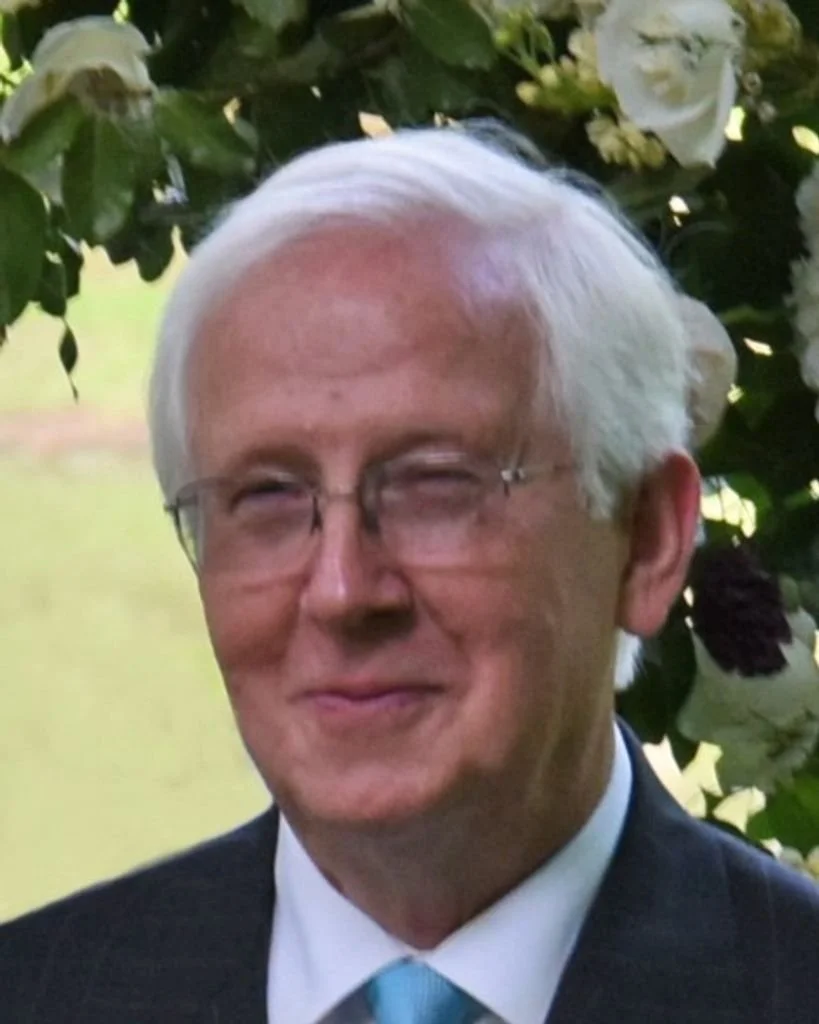
Mac Kelton
Founder of The Belize Project
I have known my dear friend Mac Kelton for almost 40 years. I arrived in Nashville in 1987, after he and his wife, Susan had worked diligently to build Pacesetter Partners into an ERA Franchise. They were the most personable real estate company I had ever worked with. The success of Mac’s company was that he had embedded his values and intentionality into every one of his sales associates. He was gifted at recruiting, training, and encouraging everyone with his humor, while getting the best out of each one.
His agent, Ginger Brooks found homes for our three corporate families that had moved to Nashville together, She made our transition to a new city easy, showing up in all the details, dropping a pillow, or coat hangers by the apartment in our transition, just when they were needed.
Mac knew business. He understood how to build something from the ground up, how to solve problems, and how to make things work. But a week of service in Belize changed the way he thought about what all of that experience was for.
That experience stayed with him. Mac began bringing people to Belize by the dozens, then by the hundreds. The Imagination Library put a book into the hands of every baby born in the country. Three hundred villages learned Bible stories, then a women’s shelter, a prison ministry, a fish farm and an alcohol rehabilitation program. He became deeply invested in the people he met there and in the belief that their lives and communities could be changed.
Mac once told me that he believed he could introduce every single person in Belize to Christ through the ministry. Four hundred thousand people. I believed him immediately. You could not spend five minutes with Mac and think otherwise.
But Mac also learned very quickly that vision alone wasn't enough. We were perpetually, exhaustingly out of money. The fundraising treadmill never stopped, and it seemed to be the condition every nonprofit lived under.
Mac found that especially frustrating because he knew the people behind the work. He knew how much they cared and how much they were capable of doing. There were incredible leaders with incredible ideas, communities that desperately needed help, and people willing to do the work. What they didn't have was enough funding to do everything they knew was possible.
Mac was part of a Charter Resource Roundtable that my friend Mark Arnold developed. A group of Nashville’s visionary leaders, who had all built successful companies. Each of them was donating time and money to non-profits they cared about, but there was never enough money.
What if something could be built that didn't constantly need to be funded, but could actually generate the resources needed to keep the mission moving?
That was the question each was asking every time we met.
It was a question Mac was uniquely equipped to ask. He had spent twenty-three years learning how to build businesses, solve problems, manage resources, and create sustainable systems. And he began to wonder whether those skills could be used for something beyond the bottom line.
That idea reflected something fundamental about Mac. He didn't see a hard line between what he was good at and what he cared about. His experience in business wasn't something he needed to leave behind in order to serve others. He saw it as one of the tools he had been given, and he wanted to figure out how to use it.
The idea that emerged was simple: build a business that could generate revenue, create jobs, serve the community, and give its profits away. Instead of constantly asking, Who can we ask to give? Mac wanted to ask, What can we build that keeps giving?
That idea became ThriftSmart.
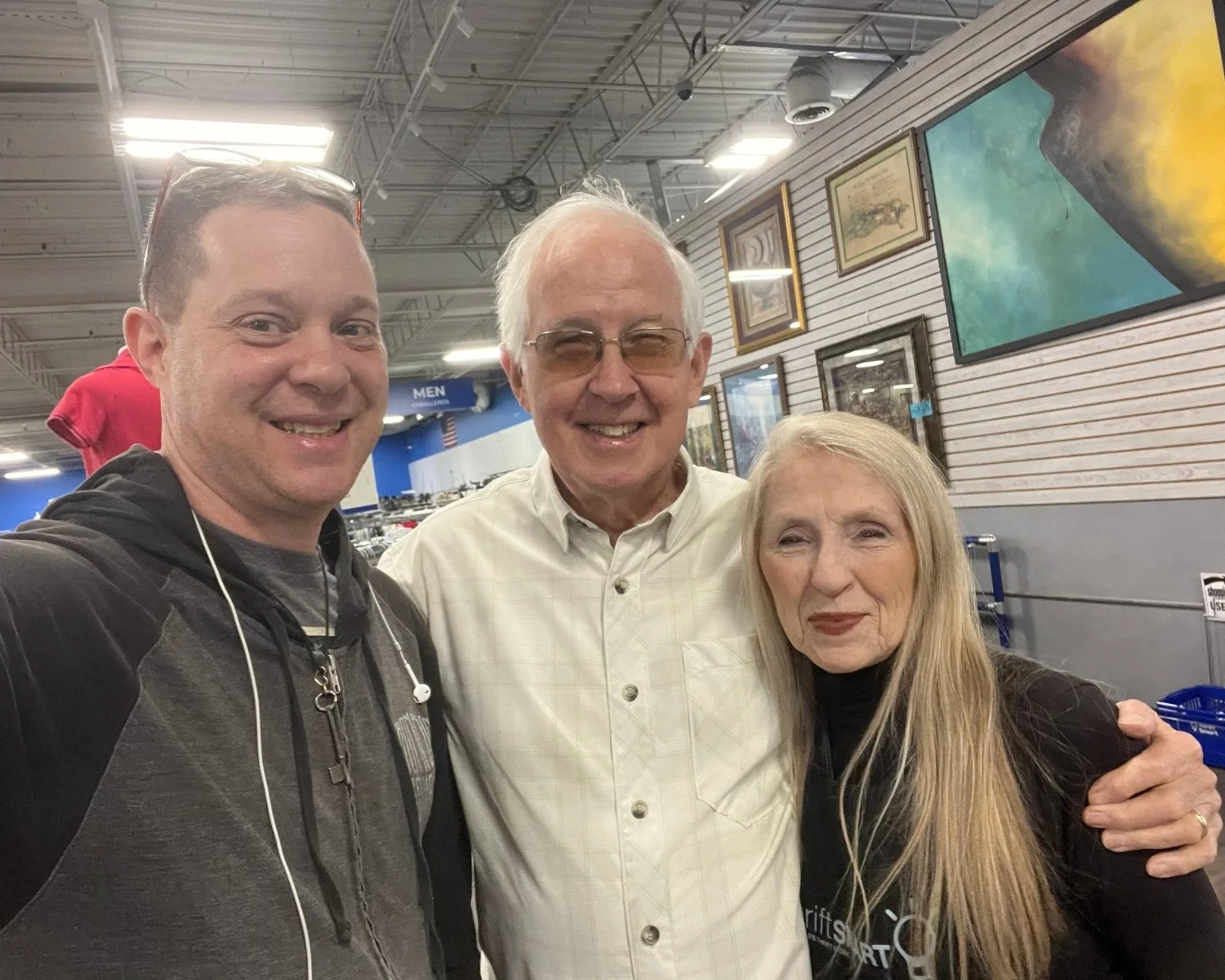
Mac at ThriftSmart alongside some of our store leadership.
Mac was alongside as a constant source of encouragement as Tres Scheibe and I built ThriftSmart. He was never the kind of person to leave an idea on paper. He came into the store. He stood in the back room and sorted donations alongside the staff. He learned what it actually took to move merchandise from the donation door to the sales floor. He counted racks, studied the workflow, asked questions, and paid attention to the details that determine whether a business actually works.
Mac had a concern for unemployed immigrants that showed up in the store. A problem that needed a solution. So Mac invited Jobs For Life into the store as a partner, created a training format that included real work in the store, showing up on time, and being accountable. We provided a meal and a classroom experience, and eventually a resume and the skill to interview for a job. But the idea needed volunteers, so Mac recruited volunteers from Christ Presbyterian Church to lead the classes.
Mac and I once worked alongside as teachers in the classroom with a group of Burmese women who spoke no English. The experience was, at the same time, difficult, and unforgettable.
Mac understood that if this idea was going to accomplish what he hoped it would, it couldn't simply be a good idea. It had to become a good business.
And eventually, it did.
His love for the people of Belize and a vision to reach every one of them to make their life better, pulled him into the day-to-day work of the mission in Belize. Without a name for it, it just became labeled “The Belize Project” and that is what it is still called today.
What began as a question became a business. What began as a business became an economic engine, generating resources for people and organizations doing important work. Mac's passion and commitment helped generate more than $2.5 million for The Belize Project, Mercy Community Healthcare, New Hope Academy, and African Leadership.
Mac saw potential where other people saw limitations. He saw communities with possibilities. He saw problems that everyone else had learned to accept, and instead of accepting them himself, he asked a question that became almost a way of life: Why can't we find a better way?
I'm grateful that I got to ask that question with him.
Mac believed that what we have been given, our skills, our experience, our resources, our ideas, is meant to be used. He found a way to put what he had been given to work for other people. He lived that belief in Belize. He lived it in business. And he lived it through ThriftSmart.
I think that's the Mac worth remembering: a man who saw a problem, believed there was a better way, and then was willing to get to work finding it.
I love Mac Kelton and his enduring influence on my life.
- Dick Gygi
